I Never Really Believed In Therapy. Maybe Now I Understand Why. I’ve never been someone who naturally believed in therapy.
Not because I hate mental health conversations.
Not because I think emotions are fake.
And not because I think people should “just toughen up.”
But because the first mentally ill person I ever knew never got better. And maybe that shapes a person more than they realise.
For most of my life, I viewed therapy as expensive introspection. A luxury for people with enough time and money to overanalyse themselves. I came from eighteen years of recruitment, hiring, performance culture, targets, pressure, corporate survival. You either performed or you didn’t.
And if I’m being brutally honest, I never fully understood how talking about feelings could materially change someone’s life. Because the version I saw growing up looked irreversible.
My youngest aunt has been an IMH patient for more than three decades.
I was only seven or eight years old when everything happened, but I still remember parts of it vividly in a way that honestly still disturbs me today. What makes it harder is knowing who she used to be before everything collapsed.
She was apparently the prettiest among all my mother’s siblings. Whenever I look at her younger photos even now, it genuinely shocks me. She looked elegant. Beautiful. Alive. Like someone who should have had a completely different life. Then something happened.
From what I understood growing up, there were problems at work, relationship issues, emotional stress building over time. But nobody really knew how serious things were becoming until she suddenly locked herself inside a room for more than seventy-two hours.
My aunt and uncle didn’t know what to do. Nobody around her knew what was happening. And then things escalated very fast.
She became aggressive. There was a knife involved. Threats to hurt herself. Threats to hurt the people around her. I was a child witnessing all of this. And when you’re seven or eight years old, you don’t understand mental illness clinically. You only understand terror.
You remember the screaming.
The fear in the adults’ faces.
The confusion.
The feeling that something irreversible had just happened.
I remember wondering if my grandparents were going to get hurt. I remember wondering if she was going to kill herself. And then after that, life just… changed permanently.
She became institutionalised in IMH.
And the hardest part to explain to people is this:
She never really came back. Thirty years. More than three decades.
Treatments. Medication. Intervention. Time passing.
But she never returned to the version of herself people remembered.
And maybe this is the uncomfortable truth I never admitted to myself until recently:
How was I supposed to believe in therapy when my first exposure to mental illness looked unsalvageable?
People talk today about healing, self-awareness, emotional regulation, journaling, inner work.
But the version I knew growing up was darker than that.
The version I knew was a woman disappearing psychologically while her family watched helplessly.
So somewhere in my mind, I think I started associating mental illness with permanence.
Not recovery. Not healing. Permanence. That changes how you see everything.
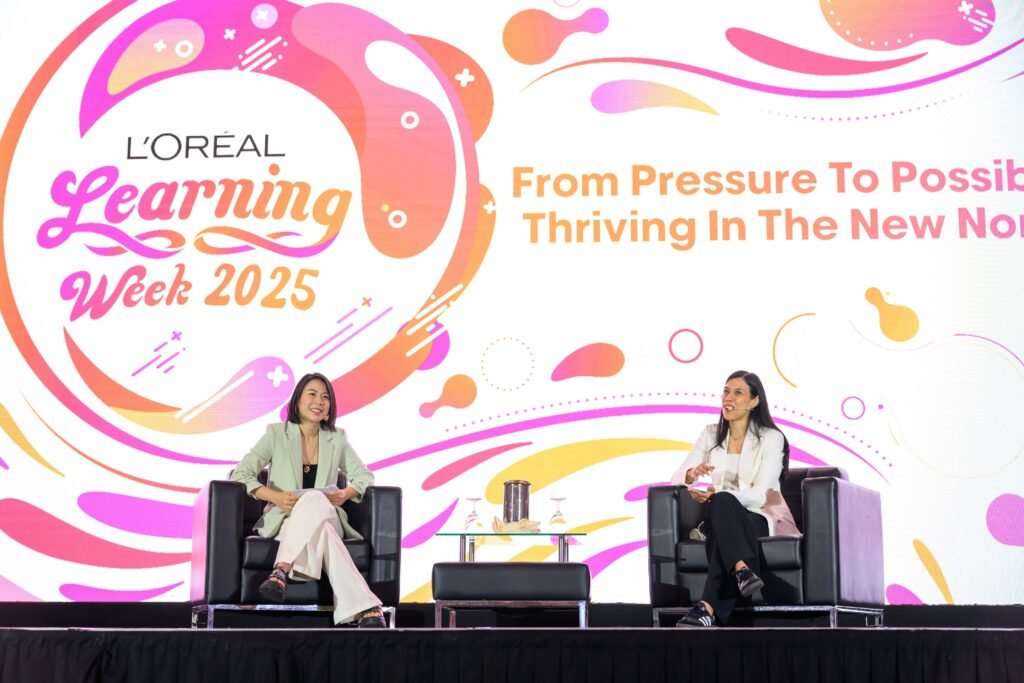
Then recently, I sat down with psychotherapist and coach Michelle Mah for Unfiltered Room HQ.
And during that conversation, something shifted in me slightly.
Not because I suddenly became someone deeply immersed in therapy culture.
But because I realised something I had never fully considered before:
Maybe therapy is not only about trying to save someone after complete psychological collapse.
Maybe part of it is preventing someone from reaching that point in the first place.
That distinction matters.
Because by the time my aunt locked herself in that room for seventy-two hours, threatened people with a knife, and psychologically broke apart in front of everyone — maybe the intervention had already come too late. And I keep wondering something that genuinely haunts me.
What if the systems that exist today existed back then?
During the episode, Michelle mentioned Singapore’s 24-hour National Mindline. A hotline for people in emotional crisis. A system designed to intervene before someone completely spirals.
And I couldn’t stop thinking:
- What if that existed in the late 1980s?
- What if someone had recognised the signs earlier?
- What if somebody around her knew where to call?
- Would her life have turned out differently?
- Would she still have disappeared psychologically?
- Would she have recovered?
Or was the damage already too deep by then?
I genuinely do not know. And maybe that uncertainty is exactly why I struggled to believe in therapy for most of my life. Because I grew up watching someone enter the mental healthcare system and never leave it whole again. That leaves a mark on a child whether they realise it or not.
The difficult thing about mental illness is that society only really talks about two versions of it.
The inspirational recovery story. Or the tragedy after somebody dies.
But there’s another version people rarely talk about.
The people who survive physically but remain psychologically trapped for decades.
The families who spend thirty years watching someone exist without ever fully returning.
The grief of seeing someone alive but unreachable. That changes your relationship with hope.
So no, I still don’t romanticise therapy.
I still think parts of the self-help and mental health industry can become commercialised, performative, and detached from reality.
But after speaking to Michelle, I finally understood something important:
There is a massive difference between:
“therapy as trendy self-optimization”
and
“psychological intervention before somebody completely breaks.”
Those are not the same thing.
And maybe for the first time in my life, I understand why that difference matters.
Michelle Mah, Founder of The Curious Bonsai
The Curious Bonsai is a boutique counselling, therapy, and coaching practice in Singapore dedicated to holistic mental, emotional and financial wellbeing. We support professionals, couples, and young adults navigating burnout, anxiety, trauma, relationship challenges, and financial concerns.
Alongside, we offer executive and life coaching designed to build resilience and clarity in work, business and life. Our integrated approach combines somatic, parts-based and strengths-based methods, neurolinguistic and systemic frameworks to foster measurable growth. Whether it is 1:1 work or corporate teams support, we provide a safe, compassionate space for meaningful change.
Visit us: thecuriousbonsai.com.sg
Helplines:
- National Mindline 1771: 1771
- Samaritans of Singapore (SOS, 24 Hours): 1-767 (1-SOS) or WhatsApp 9151 1767 for emotional support.
- Singapore Association for Mental Health (SAMH): 1800-283-7019.
Michelle’s Client Story (in Michelle’s voice):
One of the hardest things about working with new parents is that their own needs are often the last thing on the list.
One of my clients came to me not long after her baby arrived. She is a high performer at work and had just left a toxic multinational shortly after having her baby. She was struggling with suicidal ideation, finding it hard to be present as a mother, and she and her partner were in the thick of conflict that neither of them knew how to move through. The weight of it all was real. And especially for high performers who are used to winning and achieving, having a baby can often create self-doubt and a sense of failure in the small things like “why is my baby crying again”, “why is my baby not sleeping”, and the endless questions that they struggle to find the answers to.
Over about 1.5 years, we worked together – individually, and at points alongside her partner in couples therapy. She didn’t just build coping tools. She started to actually feel what was happening inside her, and respond to it differently. That shift changed how she showed up for her child, and for herself.
She also moved into a new job during this period, and one that was a better fit for her strengths and talents.
I don’t share these stories to suggest the work is linear or tidy. It isn’t. But I do share them because parents – especially new ones – often de-prioritise themselves in the midst of so much going on, and can come to therapy only as a last resort, when they’ve already been running on empty for months. Eventually we got there through gentle and consistent work, and that made it all worthwhile.

Other Media & Press:
https://michelle-mah.com/media-press/ & a recent piece with Ribbit on suicide prevention:
https://www.instagram.com/p/DXq9P8ImVSd/?utm_source=ig_web_copy_link&igsh=NTc4MTIwNjQ2YQ==