My cousin has cancer. My adopted sister has cancer.
I am fortunate — genuinely, uncomfortably fortunate — that I don’t carry that diagnosis. No family history of it, at least not the kind that shows up in scans and treatment plans. But both my parents have had issues with their gut, their stomach lining, things that the doctors attribute to lifestyle and diet and the quiet accumulation of years of not paying close enough attention to what you put into your body.
And I know I have inherited some of that. Not the diagnosis. The tendency.
I try. I really do. Some weeks I am disciplined — the food, the movement, the sleep, the things that are supposed to add up into a version of health that holds. And then some weeks I am not. I give in. I tell myself it’s one meal, one late night, one skipped workout. And it usually is. But I am not twenty-five anymore, and I don’t have children who would look after me if something went wrong. That is a thought I sit with more than I probably let on.
I don’t say that for sympathy. I say it because I think a lot of people live with exactly this quiet background hum of worry — am I doing enough, is this going to catch up with me, what happens if it does — and nobody really makes space for that conversation until something already has gone wrong.
Sitting across virtually from Michele in that recording changed something for me.
She didn’t come on to tell an inspiration story. She came on and told the truth. And the truth was: her husband got diagnosed with a blood cancer that has no cure, only remission. They drove 1,700 miles for treatment during a pandemic. She couldn’t walk into the hospital. She sat outside for four months while he went through it. And she was still running a 28-year business the whole time.
What struck me wasn’t the strength. It was the weight of everything that kept going while they were in the middle of it. The bills. The employees. The clients. The kids who were grown but still watching their parents navigate something unimaginable. The financial cost that didn’t pause for a single day of treatment and hasn’t stopped even now, six years into remission.
She said something that I keep coming back to: it doesn’t stop when you’re in remission.
The cancer retreats. The cost doesn’t.
And this is what I don’t think we talk about honestly enough.
Cancer is expensive. In ways that no one fully prepares you for, even if you think you are prepared. Even with good insurance. Even with savings. Even with a business that keeps running. The co-pays, the deductibles, the travel, the accommodation, the months of income disruption, the ongoing monitoring, the follow-ups that never fully end. And that’s before you account for what it does to relationships — because financial stress is one of the most reliable ways to fracture even the strongest ones.
I’ve watched that happen around me. I’ve seen couples who loved each other genuinely not survive the financial and emotional weight of a serious illness. Not because they didn’t care. Because they were both drowning and there weren’t enough hands between them to keep the other one afloat.
Michele and her husband got through it. They are still standing, still running the business together, still in it. But she would be the first to tell you it was not clean. It was not neat. It took a level of endurance that most people only discover they have after the fact.
I think about all of this against the backdrop of what is happening in the world right now and I genuinely don’t know how people are holding it together.
The cost of living is not coming down. It is rising in ways that feel almost designed to outpace whatever you’ve managed to save. Inflation eats the edge off every plan you make. And at the same time, the jobs that were supposed to be there — the stable ones, the ones that gave people a foundation to build something on — are being restructured, reduced, or replaced. Not all at once. Quietly. In ways that people don’t fully register until they are already in the middle of it.
The younger generation is adapting. I’ll give them that. They are preparing for a world that doesn’t look like the one their parents navigated, and they are doing it with a kind of pragmatism that I find genuinely impressive. But the current generation — the ones in their late thirties, forties, fifties, who built their lives around a set of assumptions that are quietly becoming obsolete — they are the ones I worry about. They are the ones trying to adapt and still make rent and still pay off the things they were told were good investments and still save for a retirement that feels further away every year.
Against all of that — add a health crisis.
Add a cancer diagnosis. A husband in a wheelchair from chemo. A business that still needs to be run. Kids who need to see their parents hold it together even when they aren’t sure how.
I don’t know how Michele did it. I genuinely don’t. I know she would say she just did, because there was no alternative. But that answer — you just do — while true, also glosses over the fact that not everyone gets to just do it. Some people don’t have a business that can keep running. Some people don’t have a team of six who will hold it together. Some people are one medical bill away from a decision that no one should have to make.
I don’t have a conclusion to offer here. I’m not going to wrap this up with a lesson or a framework or five things you can do to protect yourself financially before illness arrives.
What I have is this: a recording with a woman who went through something most of us fear, and who came through it — not unchanged, not without cost, but through it. And a set of questions that I think we need to be having more honestly.
How are people actually managing this? Not on paper. In reality. When the diagnosis lands and the bills start and the job isn’t as secure as it was and the savings are already stretched and you are also, in some quiet corner of yourself, scared about your own body and what it might do one day without your permission?
I don’t think we talk about this enough. Not because people aren’t thinking about it. But because thinking about it out loud feels like admitting something we’re not supposed to admit.
That we are all much more fragile than we present.
That the financial margin most of us operate on is thinner than it looks.
That surviving — actual, practical, day-to-day surviving — has become one of the hardest things we do.
And that nobody tells you this when you’re young enough to prepare differently.
It is not a motivational story. It is an honest one. And I think, right now, honest is what people need more of.
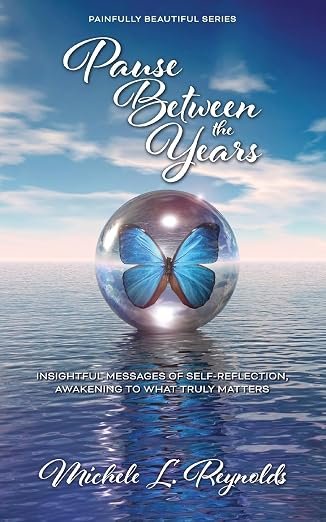
Purchase Michele’s book here
https://www.amazon.sg/Pause-Between-Years-Insightful-Self-Reflection/dp/B0CN544RDK